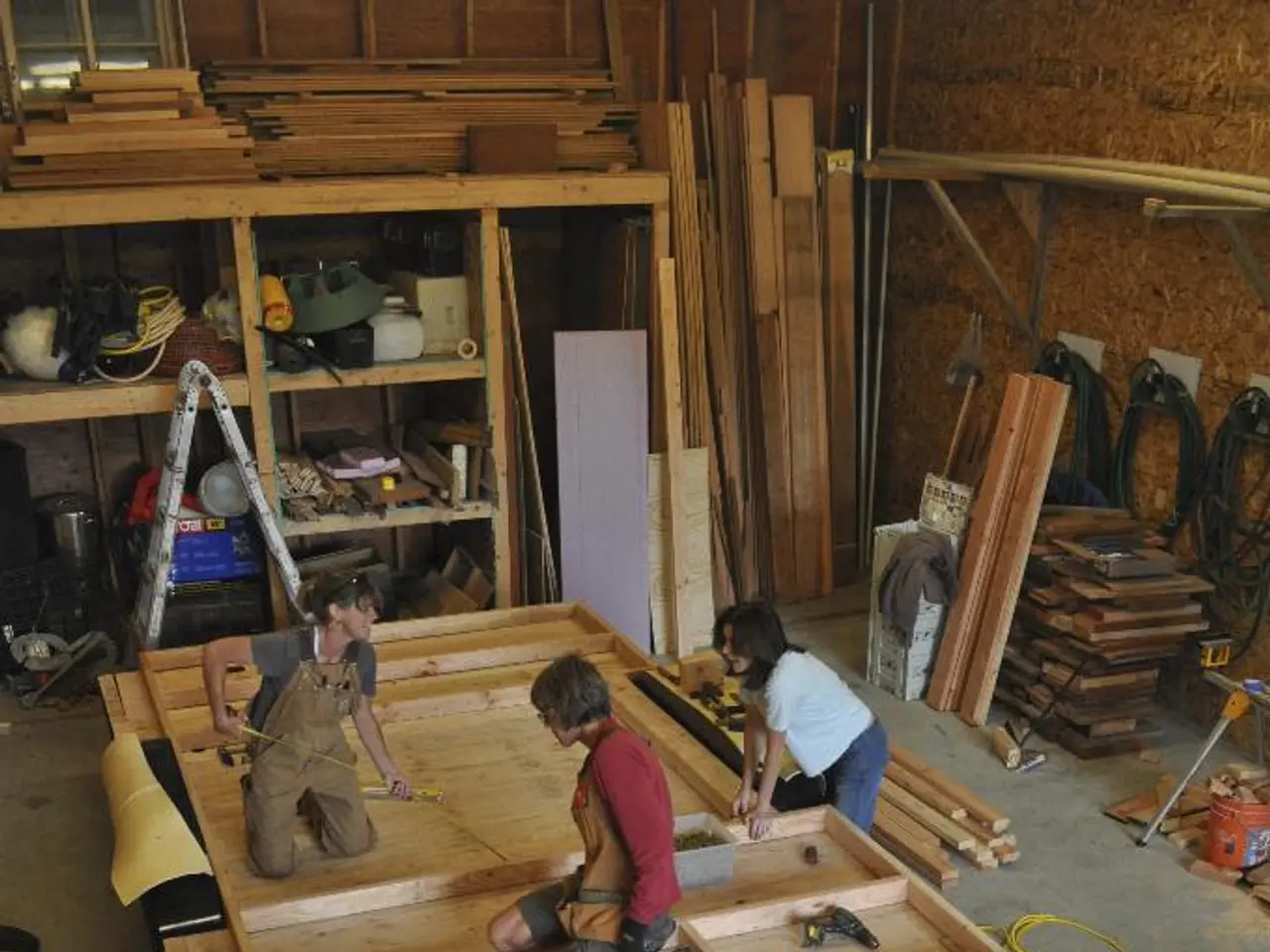
Uncover the essential steps for a triumphant plasterboard installation in a garage setting
For homeowners looking to expand their living or working space without the expense of building an extension, plasterboarding a garage can be an affordable and effective solution. This article will guide you through the tools, materials, and costs involved in plasterboarding a garage, offering insights to help you make informed decisions and achieve a welcoming and functional space.
Tools Required for Plasterboarding a Garage
To plasterboard a garage successfully, you will need a range of tools. Essential items include a tape measure, pencil, jab saw, utility knife, hand saw, T-square, hole saw, jigsaw, combi drill, laser/spirit level, working platform, and a sharp utility knife. Optional tools include a plasterboard lifter for walls or a plasterboard hoist for ceilings and awkward angles.
Materials Required
The primary material needed for plasterboarding is plasterboard sheets, available in standard sizes of 2.4 meters by 1.2 meters. Prices can vary depending on the type and quality, but a specially designed plasterboard saw with a hardened steel blade and angle guides can make the process more efficient.
Costs Involved
The cost of plasterboarding a garage can range between £700 and £1200, on average, for an average-sized garage. Factors affecting the cost include the size of the garage, the type and quality of plasterboard used, and whether you choose to hire professionals or complete the job yourself.
Additional Considerations
When planning your budget, consider the following:
- Insulation: Adding insulation behind plasterboard can increase the cost.
- Electrical and plumbing work: These may be necessary if you plan to use the space for living or working.
- Finishing touches: Painting or decorating the plasterboarded walls will add to the overall cost.
If plasterboarding a garage without a vapour barrier/insulation, condensation can lead to issues such as mould, soft spots, and corrosion of metal frames. To prevent this, a vapour barrier should be installed over the insulation before fitting the plasterboard.
In integral garages, fire-resistant plasterboard, such as Gyproc Fireline, Glasroc X, and Type X, is necessary to comply with Building Regulations.
The first step in plasterboarding a garage is to put up a frame using metal or timber studs. If using wooden battens, a moisture-proof membrane should be fitted between them and the wall. Battens should be treated, a minimum of 2.5cm x 5cm, and (centre to centre) 40cm or 60cm apart.
Labour costs will depend on location and experience, with rates typically ranging from £150 to £250 per day. Insulation, often in the form of boards, can be added between the battens for improved thermal efficiency.
Plasterboarding a garage is the beginning of transforming it into an affordable, friendly, and welcoming area. Skimming the plasterboard can be done to achieve a hardwearing finish, but it will add to the overall cost. With careful planning and consideration, plasterboarding a garage can be a cost-effective way to improve the appearance and usability of your space.
Read also:
- Avoidable foods during shingles: Hot, spicy dishes, sugary items, and so on
- Connection between Broccoli Consumption and Gout Management: Key Insights
- Home Studio Allergy Management: A Comprehensive Guide for Designers
- Gambling enthusiasts can explore a variety of Playtech slots offered by Hollywoodbets.