Garden nuisance: Maritime's struggles with Japanese beetles
In North American gardens, a persistent problem has been the Japanese beetle infestation. Last year, community gardeners in Dartmouth experienced a particularly bad outbreak of these pests.
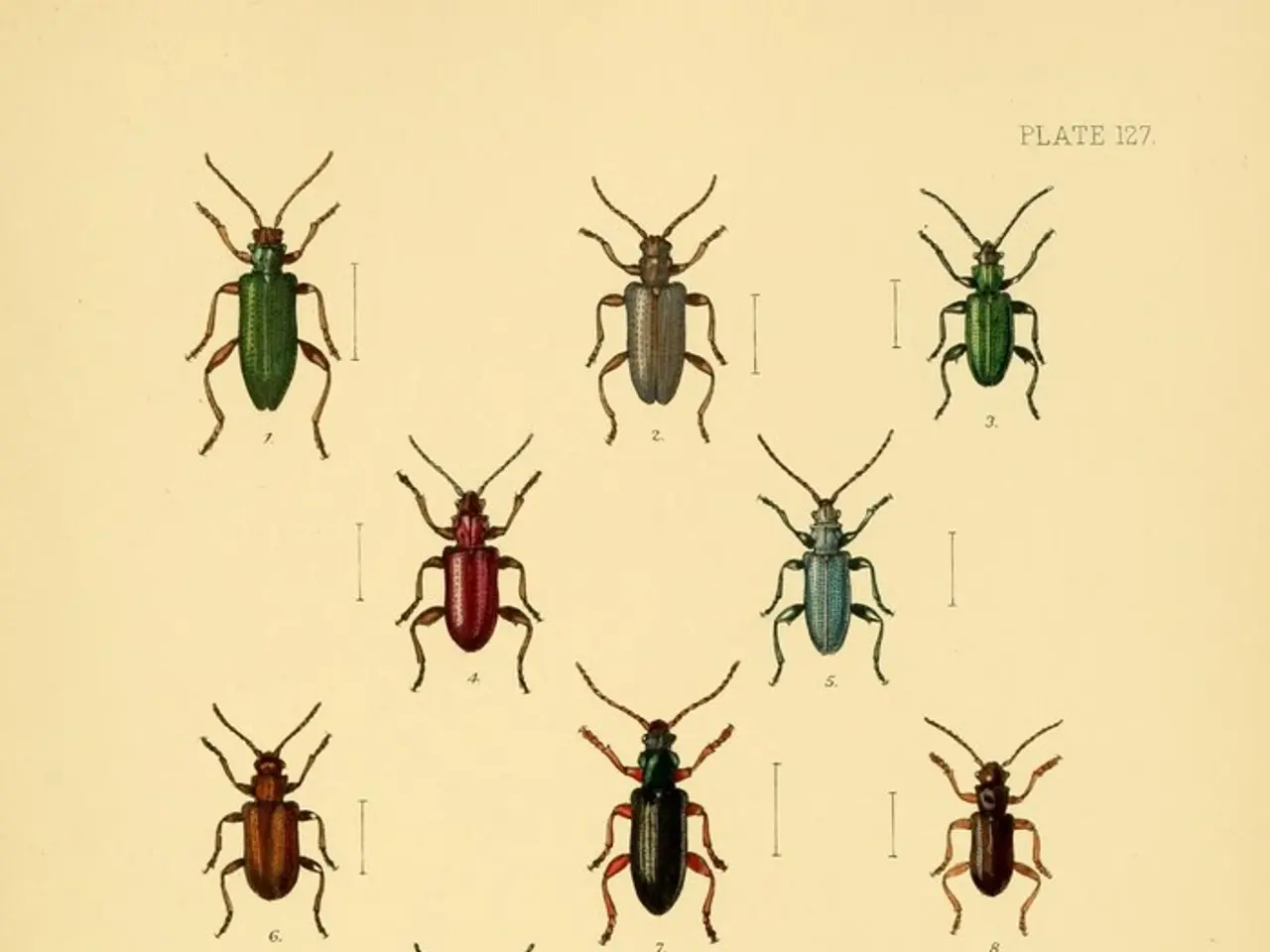
Japanese beetles are around one centimetre in length and have a metallic green head and bronze-coloured wings. They are destructive to lawns and plants, seeking out healthy ones to feed on.
To combat this issue, an integrated control strategy has been suggested. This approach combines manual removal and physical barriers for adult beetles, with biological controls and healthy lawn management practices for grubs.
For adult Japanese beetles, hand-picking is highly effective. Gardeners can pick beetles off their plants in the morning or evening when they are sluggish. Setting beetle traps away from vulnerable plants can also reduce populations by capturing males before mating. Homemade soap sprays can suffocate beetles when sprayed directly, and physical barriers such as fine mesh row covers can protect plants from beetles feeding on them.
Controlling Japanese beetles at the grub stage is equally important. Grubs start their life cycle in lawns and create lawn damage. To control grubs, experts recommend the use of biological sprays like milky spore disease (Paenibacillus popilliae) and beneficial nematodes, which parasitize and kill grubs. Lawn cultural practices such as reducing turf area, mowing at a higher height, watering deeply but less frequently, and promoting biodiversity can also help lower grub populations and reduce reliance on pesticides.
It's worth noting that broad-spectrum grub insecticides exist but tend to harm beneficial insects and are less favored in integrated pest management approaches.
Experts remind gardeners that the Japanese beetle's season in North America is fairly short. The peak season is now and they won't be leaving until fall. As long as gardeners keep on top of picking Japanese beetles off their plants, their crops should have a good shot at surviving.
Carey, a dedicated gardener, picks between 30 to 100 Japanese beetles every day. She also removes damaged leaves from her garden to prevent attracting more beetles.
Andrew Hebda, retired curator of zoology, states that our fauna may adjust to Japanese beetles, but at the moment, they do not exist as predators in North America. Not much eats Japanese beetles in North America, with their main predators not existing here.
In conclusion, an integrated control strategy is the most effective and ecologically sound approach to managing Japanese beetles in North American lawns. By combining manual removal and physical barriers for adults, with biological controls and healthy lawn management practices for grubs, gardeners can significantly reduce the impact of these pests on their gardens.
The news of Japanese beetle infestation in North American gardens, such as Dartmouth, has sparked a search for effective solutions. To combat this issue, experts recommend an integrated control strategy that includes manual removal methods, like hand-picking in the morning or evening, setting beetle traps, and using homemade soap sprays or physical barriers. For the grub stage, biological controls like milky spore disease and beneficial nematodes are suggested, along with promoting biodiversity and adopting proper lawn management practices. Carey, a devoted gardener, follows this strategy, removing between 30 to 100 beetles each day and disposing of damaged leaves. However, due to the lack of predators in North America, few eat Japanese beetles, making it crucial for gardeners to continuously implement this control strategy during their short season, which lasts until fall.