Foreign Bodies Spotted in Plant Soil: Unraveling Their Identity
In the intricate world of plant soil, two distinct entities play crucial roles: Perlite and saprophytic fungi. These entities, while different in nature, work together to create an optimal environment for plant growth.
Perlite, an inorganic substance, is derived from volcanic glass that has been heat-expanded into lightweight white particles. Its primary function in soil is to improve structure by enhancing drainage, increasing aeration, and reducing compaction. This helps maintain oxygen flow to plant roots, preventing root rot and promoting strong root systems. Perlite is particularly beneficial for plants requiring well-drained soil, such as succulents and those grown in hydroponics.
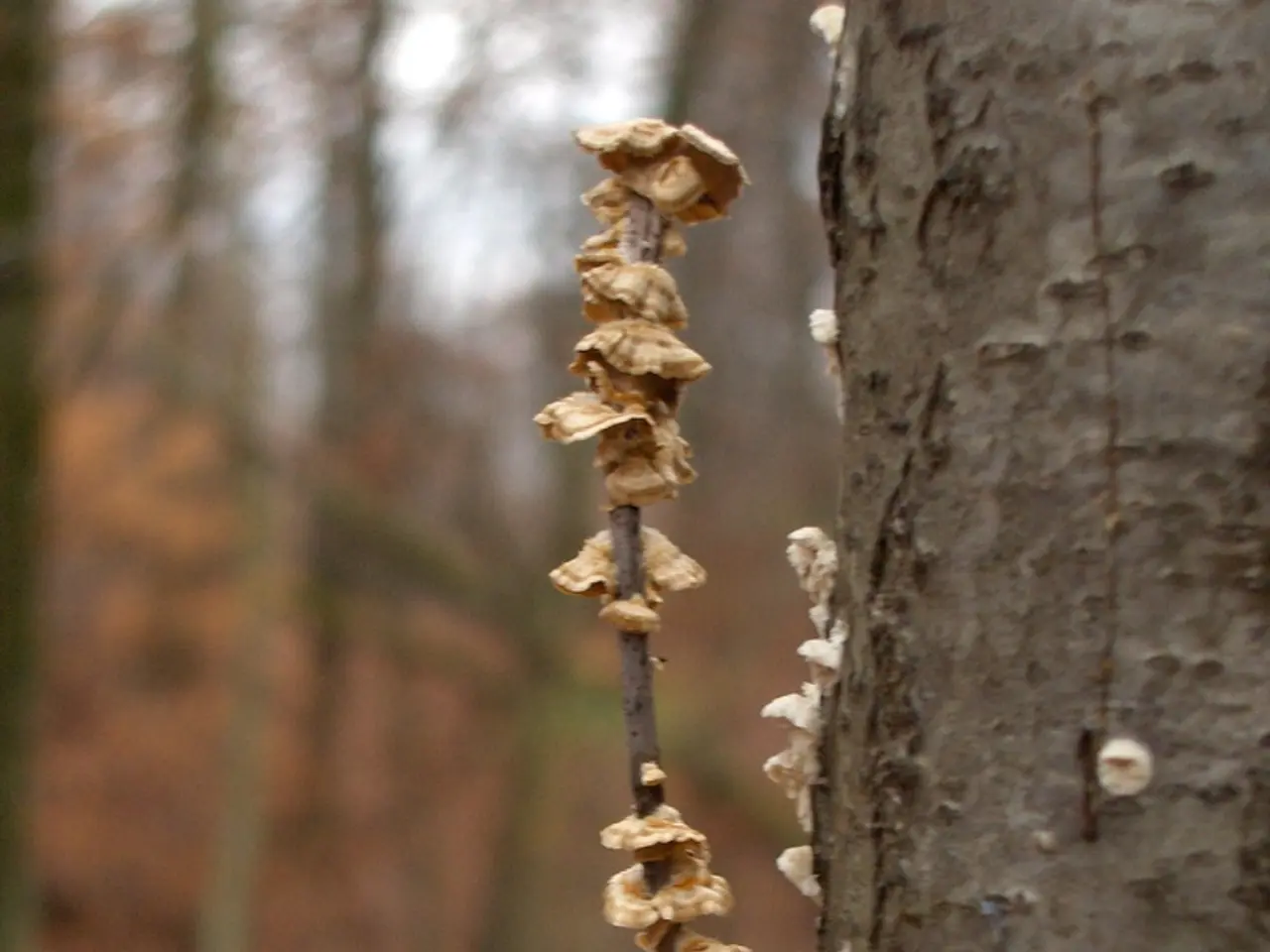
On the other hand, saprophytic fungi are living organisms that feed on decaying organic matter in soil. Fungal hyphae, the thread-like roots of a fungus, explore the soil, secreting digestive enzymes onto their food source. These fungi grow rapidly and to great lengths, bridging gaps in the soil and transporting nutrients over relatively long distances back to the plants. Saprophytic fungi play a crucial role in recycling nutrients and improving soil health.
One notable example of a saprophytic fungus is Trichoderma, which not only decomposes organic matter but also promotes plant growth and suppresses diseases. This makes it a biological defense for plants, providing an additional layer of protection against harmful pathogens.
While slime mold is not a fungus, it shares some similarities with saprophytic fungi in its feeding habits and reproduction methods. Slime mold reproduces and survives similarly to a fungus, feeding on decaying organic matter and reproducing by creating spores. However, it is a primitive organism that is harmless to plants and is a natural part of the decaying and composting cycle.
In summary, perlite benefits plants physically by improving soil aeration and drainage, while saprophytic fungi benefit plants biologically by decomposing organic matter, recycling nutrients, and improving soil microbial health. Both perlite and saprophytic fungi serve complementary roles, with perlite optimizing the physical environment for roots, and saprophytic fungi optimizing the biological and nutrient environment. This distinction is important for gardeners or growers to decide based on whether their soil needs better physical drainage and aeration (perlite) or improved organic decomposition and disease suppression (saprophytic fungi).
To complement the physical enhancements provided by Perlite in home-and-garden practices, consider adding saprophytic fungi, such as Trichoderma, to enrich the biological and nutrient environment of your home-and-garden lifestyle. These fungi work harmoniously with Perlite by recycling organic matter, promoting plant growth, and suppressing diseases, thus creating a favorable lifestyle for both plants and gardeners.